🌿 Finally, the journey to Omkareshwar began. We booked a cab directly from our hotel for the ~4.5 hour drive (around 140 km) and it depends on the traffic too. The skies seemed to have opened just for us, the rain kept pouring gently sometimes in sheets, sometimes in a fine mist. It wasn’t a stormy rain but a soothing one, almost like nature itself wanted to wash the path before we reached Omkareshwar.
As the car rolled out of Ujjain, the familiar temple bells and city bustle faded behind us. Slowly, the scene shifted into wide green fields where farmers undeterred by the rain were still out with their oxen ploughing patiently. 🌾 The hills in the distance wore a fresh green robe, rivers swelled under the rain’s touch and every drop against the windowpane felt like a note of calmness.
Along the way, we passed the Shani Dev Navgrah Mandir standing tall and dignified against the monsoon sky. 🌌 There was something magnetic about it as if the temple itself was watching over every traveler on the road. I made a quiet note to myself: On the return journey to Ujjain, I’ll stop here. Because some places are not meant to be rushed past, they’re meant to be sat with, absorbed.
The whole journey felt like a handover Mahakaal’s intensity easing me into the meditative embrace of Omkareshwar. 🏞️✨ For me, this wasn’t just a ride, with the mountains whispering, farmers sowing new life into the earth, rivers flowing fuller than ever and rain washing away every trace of city stress, I realized the road to Omkareshwar itself is part of the pilgrimage. 🌧️🚗💭
📌 Travel Tips for Reaching Omkareshwar
If you’re planning your journey, here are some practical options:
- 🚖 By Road (Cab/Car): Ujjain to Omkareshwar is about 140 km (4–5 hours). Hiring a cab from your hotel is the most comfortable choice.
- 🛤️ By Train: Take a train to Omkareshwar Road Station then a short taxi/auto ride (approx. 12 km) will bring you to the temple.
- ✈️ Via Indore: For those prone to motion sickness, you can travel via Indore break your journey and then continue by car or bus.
We finally reached our Hotel which was walking distance to the temple. It was an exhausting day so we rested for the rest of the day so that we can feel fresh for our next day

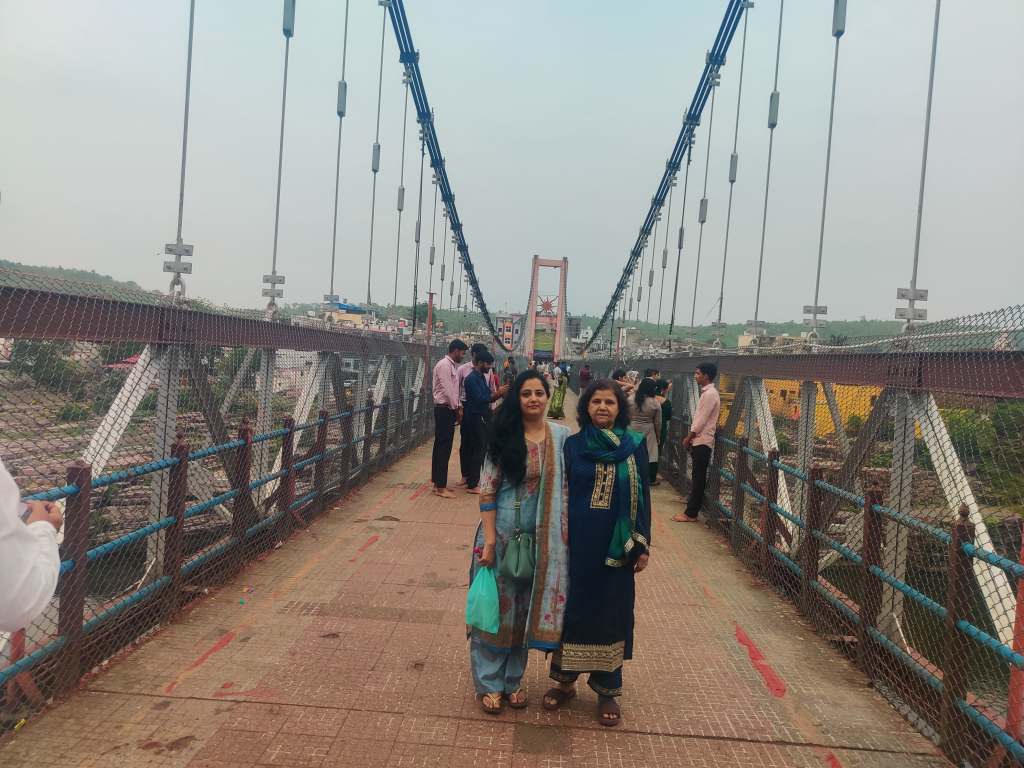
🌸 Omkareshwar & Mamleshwar Jyotirlinga – The Island of Eternal ॐ
If Ujjain feels like Mahakaal’s fire then Omkareshwar is like a cooling river chant – soft, serene, and timeless. ✨ Nestled on an island in the sacred Narmada River, Omkareshwar Jyotirlinga holds a unique place among the 12 Jyotirlingas.
What makes it extraordinary is the geography itself: the Narmada in her graceful flow splits into two branches here encircling a piece of land shaped like the ॐ (Om) the eternal cosmic sound. 🌊 This isn’t just symbolism, it’s as if nature carved out the very essence of spirituality in stone and water.
After taking bath we started our journey for the divine darshan. Stepping into Omkareshwar feels like entering the very heart of divinity, it pearced my soul and filled my heart with emotions. The Omkareshwar Jyotirlinga exudes a serene yet irresistible energy. The moment you enter, your eyes are drawn to Nandi Maharaj, faithfully guarding his Mahadev, a silent sentinel welcoming devotees with unwavering devotion.
- The Omkareshwar Jyotirlinga though humble in size, pulses with a profound shakti that reminds you every part of creation no matter how small carries its own sacred strength. Standing before it, a gentle hush falls over the mind, and it feels as if Mahadev himself leans in to listen – to every prayer, every silent yearning of your heart 🕉️. In that stillness, time seems to pause, and the soul can almost touch the eternal.The air is filled with the rhythm of “Har Har Mahadev,” and often you’ll spot sadhus in deep meditation or softly reciting Shiva mantras, their presence adding to the temple’s sanctity. 🌸
- A short walk across the suspension bridge takes you to the Mamleshwar Temple equally revered. In fact, many scriptures mention that the true Jyotirlinga resides here making darshan incomplete without bowing at both shrines. 🙏
- Together Omkareshwar and Mamleshwar represent the inseparable union of Shiva and Shakti, the cosmic balance that sustains creation.

✨ After completing the darshan, I also visited Parvati Mata’s temple, where the divine feminine energy is beautifully worshipped. Her blessings felt like a mother’s gentle embrace – soft, nurturing and reassuring.
Being in Omkareshwar is more than a pilgrimage; it is a reminder of how faith and divinity flow like the Narmada itself – eternal, purifying and life-giving. 🌊
🌟 Why two? The split of the Jyotirlinga into Omkareshwar and Mamleshwar stems from legends about King Mandhata and the deity Vindhya where Lord Shiva agreed to be present at the sacred island. To fulfill the prayers of the gods and sages, the Jyotirlinga divided itself into two forms, with Omkareshwar being the soul (or the “Omkar” shaped form on the island) and Mamleshwar representing the body. Devotees believe a complete darshan of the Jyotirlinga requires visiting both temples, one on the island and the other on the mainland. That is why darshan at Omkareshwar is considered incomplete without visiting Mamleshwar.
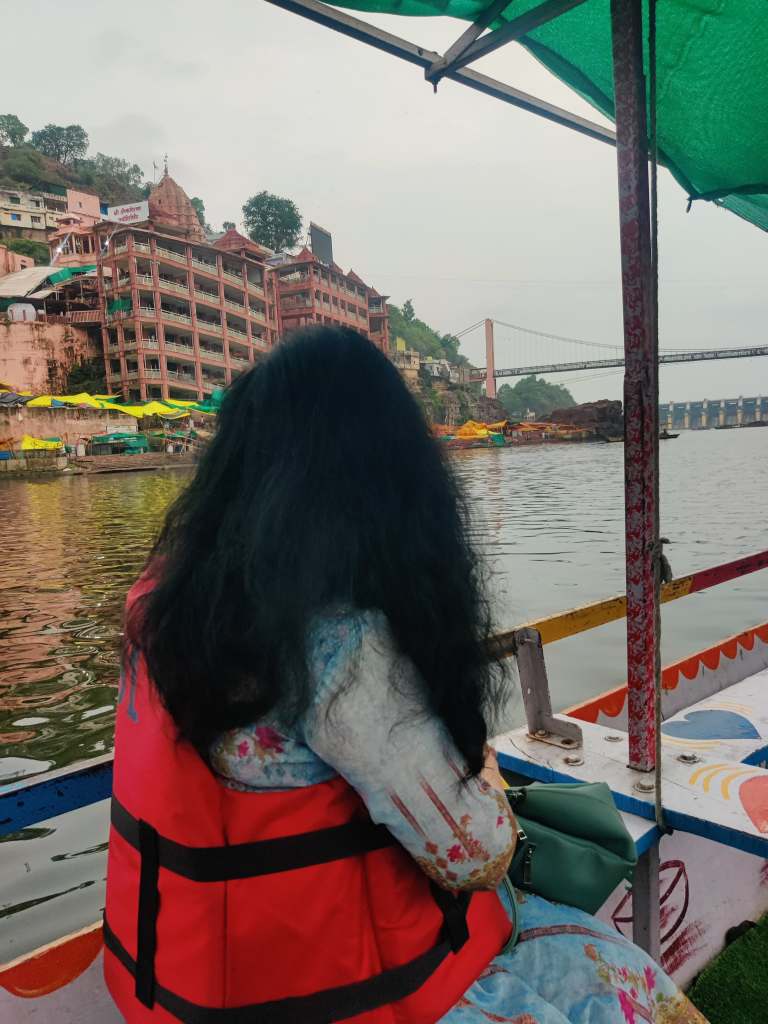
🛶 The Boating Experience – Not to Miss!
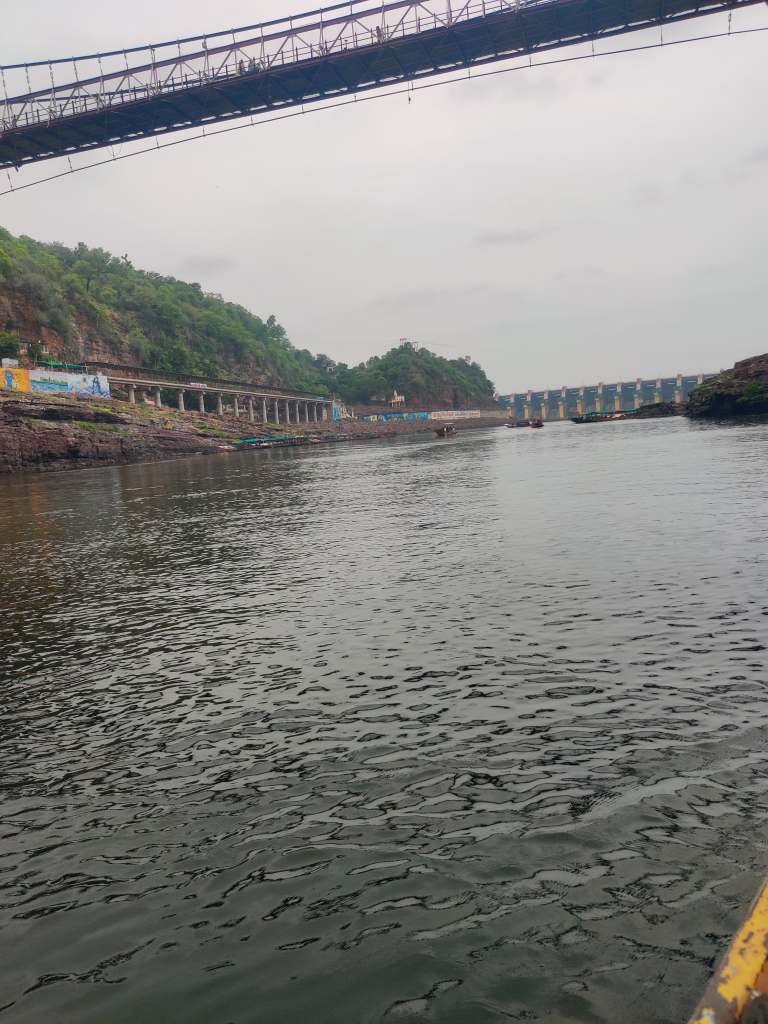
You can reach the island temple either by the suspension bridge or a short boat ride (₹20–₹50). But if you really want to experience Omkareshwar’s soul, I’d say spend a little more.
💰 For ₹500–₹1000, boatmen will not only drop you at the temple but also take you on an extended ride:
- 🚩 Past the grand ghats and temples
- 🗿 Towards the Statue of Oneness – a magnificent 108-foot-tall statue of Adi Shankaracharya unveiled in 2022 standing on Mandhata mountain. Depicted at the age of 12 when he first visited Omkareshwar, the statue honors the philosopher-saint who revived Hinduism and Advaita Vedanta in India. A vision of wisdom looking over the Narmada.
- 🌅 🌊 To the divine Triveni Sangam where the sacred Narmada, Kaveri, and Saraswati rivers are believed to merge. The water here is said to be at its purest and the view of the confluence is simply breathtaking.
And yes, taking a holy dip in the Narmada is a must. 🛁 Pilgrims believe it washes away not just fatigue but also lifetimes of karmic dust. The cool flowing water truly feels like mother Narmada embracing you.
👉 Trust me, this boat journey is more than transport, it’s meditation in motion. The oars slicing the river, chants echoing across the banks and the sight of temples standing timelessly, it’s an experience that stays etched in your heart. 💫
📌 Travel Guide Tips
- Bathing: Carry a change of clothes if you plan to take a dip. There are ghats and steps for easy access.
- Boat Charges: Regular temple crossing ₹20–₹50 | Extended ride ₹500–₹1000 (bargain politely).
- Best Time: Early morning dip followed by temple darshan — the rising sun over Narmada is divine.
- Darshan Tip: Visit Omkareshwar first then Mamleshwar for a complete blessing. Early morning is the best time to vist as it is less crowded.
- Safety: Boats are generally safe but avoid during high floods/strong monsoons.
- If you are planning to get shivling, instead of buying it from the shop take it from the narmada river itself. It is the most purest form of shivling however, it also depends on your choice and prefernces.
✨ Omkareshwar is not just a temple, it’s an experience of river, faith and silence. When you sit on that boat watching the ॐ-shaped island rise before you and when the Narmada gently laps against the ghats, you realize why this place is called Omkareshwar, the very sound of the universe flowing into your heart.
🚶♀️ Omkareshwar Parikrama – A Meditative Walk of the Soul
Embarking on the parikrama of Omkareshwar is more than a physical journey, it’s a spiritual voyage around the sacred Mandhata Island, tracing the path of devotion and introspection.
- Distance: ~7 km, encircling the entire island
- Duration: ~2–3 hours at a relaxed pace
- Experience: As you walk, the rhythm of your steps merges with the gentle flow of the Narmada while hills, caves and riverside vistas create a serene backdrop for reflection. Along the way scattered shrines invite you to pause, breathe and absorb the energy of each sacred site.
Notable stops along the way:
- Gauri Somnath Temple: Home to a massive Shiva idol, the temple radiates a quiet power that draws you in.
- Shankaracharya Caves: Steeped in history, these caves are where Adi Shankaracharya is believed to have met his Guru, a place that echoes with wisdom and silent reverence.
- Siddhanath Temple: Admire the intricate Gupta-era architecture, a timeless testament to devotion and craftsmanship.
For the best experience, undertake the parikrama early in the morning or during the evening, when the air is cool and the island glows in soft, natural light. Carry water and walk mindfully for every step is not just a movement around the island but an inward journey of the soul where the rhythm of your feet aligns with the heartbeat of the divine.
🌃 Evening Aarti on the Narmada – A Soulful Experience
No visit to Omkareshwar is complete without witnessing the evening aarti at Gomukh Ghat. Unlike the grand spectacle of Varanasi, this aarti is intimate and deeply personal yet equally mesmerizing.
- Timing: The aarti begins around 6:30 PM to 7:00 PM depending on the season and lasts approximately 30–45 minutes.
- Best Time to Arrive: Reach 10–15 minutes early to find a good spot near the ghats and absorb the tranquil riverbank ambiance.
As the sun dips behind the hills, the Narmada glows golden reflecting flickering oil lamps. The rhythm of the river flowing gently, the echo of conch shells and the chants of priests blend into a sacred melody that wraps around your soul. Devotees line the steps offering diyas and flowers while the scent of incense drifts in the evening breeze.
For a richer experience:
- Sit quietly on the steps or a nearby stone, close your eyes and let the sounds, smells and sights wash over you.
- Carry a small diya or flower offering to participate in the ritual, a symbolic gesture that connects you to the river and the divine.
- Photography is allowed but the focus is best kept on soaking in the moment, it’s a meditation in motion.
By the time the aarti concludes, the Narmada has transformed into a living mirror of devotion leaving an imprint of calm and reverence that lingers long after you step away. For many travelers, it is the spiritual crescendo of their Omkareshwar visit, a moment when the soul quietly aligns with the eternal rhythm of the river.
🍛 Food & Stay in Omkareshwar – Nourishment for Body and Soul
Omkareshwar is not just a feast for the eyes and spirit; it offers a delightful culinary journey and comfortable stay options for every kind of traveler.
Where to Eat:
- Temple-run Bhojanalayas: For those seeking satvik vegetarian meals, the temple-managed eateries serve simple yet wholesome fare — dal, rice, rotis, and seasonal vegetables — prepared with devotion. It’s perfect for a light lunch or dinner after a day of darshan and parikrama.
- Local Breakfast Stalls: Start your day with a plate of Poha and Jalebi, a classic combination loved by locals and pilgrims alike. The soft, spiced poha paired with the golden syrupy jalebi is energizing and utterly satisfying.
- Refreshing Drinks: Beat the heat with freshly pressed coconut water or sugarcane juice available at roadside stalls. Both are hydrating and offer a small taste of local flavors.
Where to Stay:
- Narmada Resort (MP Tourism): Located close to the river, the resort offers comfortable rooms with modern amenities and scenic views. It’s ideal for those looking for a quiet, serene stay.
- Bharat Sadhu Samaj Ashram: For travelers seeking a spiritual immersion, this ashram provides basic accommodation in a peaceful environment, with easy access to the temple and ghats.
- Budget Hotels & Guesthouses: Scattered near the temple, these offer affordable and convenient lodging. While simple, they put you right in the heart of the town, close to darshan, shops, and local eateries.
Tips:
- Book your stay in advance, especially during festivals, as Omkareshwar draws a steady stream of devotees.
- Try to mix satvik meals with local snacks to experience both the spiritual and cultural flavors of the town.
- Staying near the river enhances the experience waking up to the sound of the Narmada and evening aarti adds a magical rhythm to your visit.
Omkareshwar nourishes not just the soul through its temples and ghats, but also your senses from the taste of traditional meals to the comfort of a restful stay, making your pilgrimage both divine and delightfully human.
After completing the darshan, we returned to our hotel for a hearty breakfast, replenishing our energy for the journey ahead. Soon, it was time to head back to Ujjain, and we booked the same cab that had brought us to Mandhata. The return trip was expected to be quicker, the traffic timings were in our favor but as often happens on Indian roads, we found ourselves stuck in unexpected traffic delaying us by nearly an hour. I felt a surge of worry, fearing that we might miss visiting the Shani Navgrah Mandir and would be unable to seek the final permission from Kal Bhairav to complete our pilgrimage.
We pressed on, hearts hopeful reminding ourselves of an old saying: “If you ask for a wish sincerely, it will be granted.” True to this, despite the delay we reached the Shani Navgrah Temple. Standing there, we offered our prayers to Shani Dev and the Navgrahas feeling a sense of peace and alignment. The energy of the temple, the devotion of fellow pilgrims and the quiet resonance of the chants filled us with gratitude.
Our journey was not complete without visiting Kal Bhairav. With folded hands, we sought his blessings and permission to conclude our pilgrimage and return home safely. We bowed our heads, asked for forgiveness for any missteps and expressed our heartfelt gratitude before bidding him farewell.
A reflection struck me deeply during my previous visit to Ujjain with my father, we had not had the chance to visit Kal Bhairav. Perhaps that was why Mahakal called us again guiding us to complete this yatra fully and correctly. There was a profound sense of closure and fulfillment, a realization that every step, delay and blessing had led us to this moment of divine completion.
They say that visiting Jyotirlingas carries a significance beyond words and after this journey, I truly understood why. My perspective was renewed, my fears dissolved and my mind & soul found the calm they had been yearning for years. From the powerful, commanding presence of Mahakaal to the serene, tranquil embrace of Omkareshwar and Mamleshwar, I felt Shiva in every form – the destroyer, the protector, the teacher and the eternal friend.
As I realized deeply, “Shiva isn’t something you seek outside, he reveals himself when you approach with love, patience and complete surrender.”
I hope you enjoyed this journey through Omkareshwar and Ujjain as much as I did sharing it with you. May these tips help you experience the pilgrimage smoothly, with peace in your heart and no worries along the way.


 Story and Beyond with Pratiksha
Leave a comment