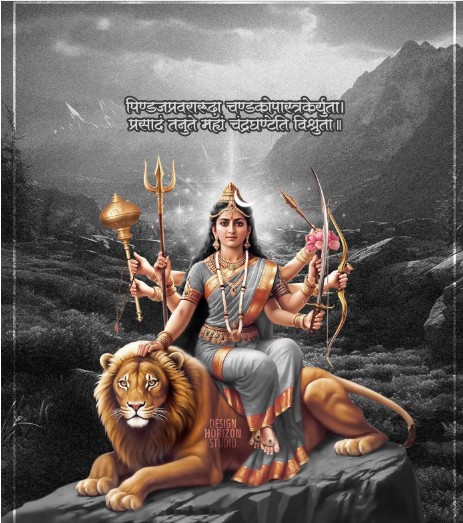
या देवी सर्वभूतेषु मां चंद्रघंटा रूपेण संस्थिता।
नमस्तस्यै, नमस्तस्यै, नमस्तस्यै, नमो नमः।
पिंडजप्रवरारूढा, चंडकोपास्त्रकैर्युता।
प्रसादं तनुते मह्यं, चंद्रघंटेति विश्रुता।।
Navratri is not just a festival of colors, rituals, and devotion, it is a spiritual journey, one that mirrors the stages of growth within each of us. Across these nine nights, the divine mother Durga is worshipped in her nine forms, each symbolizing a unique quality of Shakti (feminine power). These forms together guide us on an inward journey of transformation.
We begin Navratri with the daughter phase – innocent, pure and filled with devotion. This stage reminds us of the gentle beginnings of life where simplicity and faith shape our path. As we move ahead, we step into the stage of the tapasvi (seeker) – disciplined, patient and resilient. Here, strength is cultivated within preparing us for life’s trials. Ultimately, this journey brings us to the warrior within, a phase that celebrates courage, assertiveness and the ability to confront darkness without losing compassion.
The third day of Navratri represents this warrior energy. On this day, we worship Maa Chandraghanta, a radiant goddess who embodies the dual qualities of serenity and strength – a protector who roars like a lion in the face of injustice, yet radiates peace and grace for her devotees. She is a reminder that true courage is not reckless aggression but bravery guided by compassion and balance.
“And here lies a paradox worth reflecting on: while we fold our hands and bow before her divine image, do we truly recognize and honor the same courage in the women around us or do we dismiss it, telling them to ‘adjust’ because society says women shouldn’t be this way?”
Maa Chandraghanta, the third manifestation of Goddess Durga, is revered as a symbol of power, fearlessness and divine protection. Her very name carries profound meaning – it is a combination of two words:
- “Chandra” meaning moon, representing calmness, beauty and the soothing radiance of divinity.
- “Ghanta” meaning bell, a symbol of strength, clarity and the resounding energy that drives away negativity.
Together, Chandraghanta translates to “the bell of the moon” signifying a perfect blend of serenity and strength. The crescent moon she wears on her forehead is shaped like a temple bell and it is believed to resonate with divine vibrations that purify the atmosphere, dispel fear and awaken spiritual consciousness.
She is depicted with ten arms, each holding a sacred weapon and seated upon a fierce lion together symbolizing her readiness to fight injustice and her role in vanquishing demons. She is a formidable force who fights against evil using weapons like the sword, trident and bow to establish justice and dharma. Yet, alongside her warrior form, she blesses her devotees with inner balance, serenity and courage to face adversity.
Worshipping Maa Chandraghanta brings:
- Inner Balance and Courage – Brings hope, resilience, and the courage to face unfavorable situations.
- Protection from Negativity – Shields devotees from evil forces and negative energies.
- Strength and Fearlessness – Fills the heart with the energy to confront challenges head-on.
- Stabilized Emotions – Invokes serenity, calmness, and emotional harmony.
Day 3 of Navratri carries a profound message:
- From Seeker to Protector – After the tapasvi phase of Maa Brahmacharini, Chandraghanta marks the shift towards becoming a warrior.
- Strength with Serenity – She teaches that true power is not blind aggression but balanced courage guided by compassion.
- Awakening Shakti Within – Her form inspires us to embrace our inner warrior, to rise above fear, and fight the demons of injustice, both internal and external.
From mythology to history, India has celebrated warrior women who embodied this spirit: Rani Lakshmibai who rode into battle with her infant strapped to her back Rani Durgavati, who defended her kingdom till her last breath and countless unsung women who challenged societal norms.
Yet, while we glorify goddesses and queens in stories, temples and festivals, we often hesitate to recognize or support living women who display the same courage.
The Contradiction We Live With
This is where our devotion often meets its greatest paradox:
- In temples – We bow before Maa Chandraghanta with folded hands, chanting her praises as the fierce destroyer of demons. We glorify her lion mount, her ten weapons, and her fearlessness, drawing strength from the very qualities she embodies.
- In society – The moment a woman around us mirrors even a fraction of that spirit when she raises her voice against injustice, speaks with authority or dares to make independent choices – she is more likely to be silenced, criticized or shamed than celebrated.
Everyday women are fighting their own battles not against mythical demons but against very real ones:
- In workplaces where they face bias, glass ceilings or harassment while trying to claim the success they deserve.
- In homes where cultural restrictions or unequal expectations clip their wings and limit their freedom.
- In society where stereotypes still dictate how a woman should speak, behave or dream.
Yet, instead of applause, these acts of courage are often met with resistance, suspicion or judgment. We sing hymns to a goddess riding a lion, wielding weapons and roaring against injustice. But when a woman in real life dares to roar to demand equality, to claim respect or to protect her dignity – our collective response is often discomfort, dismissal or outright suppression.
This contradiction reveals a painful truth: we are comfortable venerating courage in mythology but hesitant to embrace it in reality.
So today not just chant mantras and bow before only chandraghanta maa but
- Honor Everyday Warriors – Recognize the strength of women who stand up for themselves and others.
- Break Hypocrisy – Devotion should not end at rituals, it must extend to respecting women who live these values.
- Celebrate Balance – Like Chandraghanta, women today balance gentleness and power. This duality deserves respect not fear.
- See the Goddess Within – True worship is not just in mantras but in recognizing the Chandraghantas walking beside us – mothers, sisters, colleagues, leaders, friends.
The third day of Navratri is not just about worshipping courage, it’s about inner awakening and social reflection. Maa Chandraghanta is a reminder that strength and serenity can coexist that courage is sacred and that fighting for justice is divine.
If we can revere a goddess riding a lion into battle, we must also respect and support the women who roar against injustice in their everyday lives.
✨ This Navratri, let’s not only worship Maa Chandraghanta but also honor the Chandraghantas among us.


 Story and Beyond with Pratiksha
Leave a comment