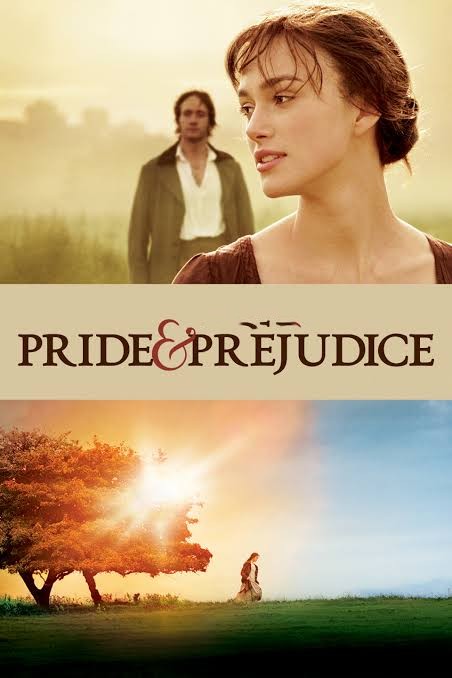
Few love stories have endured the way Jane Austen’s Pride and Prejudice has. Set against the genteel yet uncompromising social structure of 19th-century England, this timeless classic is far more than a tale of romance. It is an exploration of human nature itself, of pride that blinds us, prejudice that misguides us and the slow, humbling awakening required to overcome both.
Through Elizabeth Bennet and Mr. Darcy, Austen crafts an extraordinary study of personal transformation. Their love does not bloom through impulsive passion or charming first impressions; in fact, it emerges from the opposite. It grows through misjudgements, wounded pride, sharp exchanges, revelations and finally, the courage to change. Every misunderstanding becomes a lesson in empathy. Every conversation becomes a small step toward emotional clarity. In watching them evolve, we witness how humility, honesty and self-awareness can reshape not just a relationship but an entire life.
Yet Austen’s brilliance extends beyond character arcs. Pride and Prejudice is also a razor-sharp commentary on class, gender and social expectation – a world where reputation shapes desire, where wealth dictates worth and where true love must fight to transcend the structures built to contain it. Austen makes this triumph believable, reminding us that the strongest bonds are forged through equality, understanding and respect – not convenience.
In a time where fleeting attraction often overshadows genuine emotion, this movie remains a quiet but resounding testament that real love is not about perfection or possession but partnership – two people willing to see each other clearly, forgive generously and grow continuously.
When Literature Becomes Visual Poetry
Directed by Joe Wright, the 2005 adaptation transforms Austen’s delicate prose into cinematic art. Every technical choice feels like a homage to the novel’s emotional core.
Roman Osin’s cinematography is pure visual grace.
Rolling meadows, fog-kissed morning fields, candlelit rooms – each frame unfolds like a painting. Wright’s signature long takes, especially the fluid ballroom sequences and Elizabeth’s solitary countryside walks, pull us into feeling rather than spectacle.
Dario Marianelli’s score, an Oscar-nominated masterpiece, layers piano and strings with elegant restraint. The music doesn’t dictate emotion – it reveals it. Tender, dignified, timeless.
And then there is that scene – the misty morning encounter.
Darcy walking toward Elizabeth through the golden haze at dawn.
No orchestral swell. No dramatic monologue.
Just breath, quiet and truth.
It remains one of the most romantic shots in film history precisely because of its simplicity.
Where Characters Become Human
Keira Knightley as Elizabeth Bennet is sharp, luminous and profoundly real. Her expressions fill the spaces where dialogue stops, a performance that earned her an Academy Award nomination for Best Actress.
Matthew Macfadyen’s Darcy is a study in restrained emotion. His silence holds more than his words and his vulnerability, when it finally surfaces makes the character unforgettable. His portrayal adds depth to Darcy’s transformation, giving the audience a love story that feels earned, not granted.
Together, Knightley and Macfadyen create a chemistry that doesn’t burst into fireworks – it glows.
Quiet, lingering like sunlight after rain.
💫 The World of the Bennet Family
The story opens in the quiet countryside of Hertfordshire where the Bennet family lives a life that is comfortable but far from extravagant. Their world is shaped by gentle routines, lively conversations and the ever-present hum of possibility. The family’s modest estate, Longbourn, is filled with the chatter of five unmarried daughters, each with her own dreams, flaws and charms.
At the center of the household is Mrs. Bennet, a woman ruled by nerves and an unwavering determination to see her daughters well-married. Her anxieties often turn into dramatic proclamations, while Mr. Bennet with his dry wit and love for quiet, watches the chaos unfold with amused detachment. Their home is equal parts affection, noise and mismatched personalities – the perfect stage for what is to come.
Everything shifts with the arrival of Mr. Charles Bingley, a wealthy, cheerful bachelor who takes up residence at the nearby Netherfield Park. To Mrs. Bennet, his arrival is nothing short of divine intervention. In her mind, he is already destined for her eldest daughter, Jane whose grace, gentleness and unshakable sweetness make her the embodiment of ideal womanhood.
The long-awaited opportunity arrives at a lively local ball. The room is filled with music, candlelight, fluttering fans and more speculation than conversation. Jane’s serene beauty immediately captures Bingley’s attention; his admiration is open, sincere and impossible to miss. Their connection unfolds with the ease of two kind souls recognizing each other.
But not every newcomer is so warm.
Among Bingley’s party is his friend, Mr. Fitzwilliam Darcy – tall, reserved and wrapped in an aura of unapproachable pride. Where Bingley smiles freely, Darcy measures every word. Where Bingley sees amusement, Darcy sees impropriety. His refusal to dance with anyone outside his immediate circle sends quiet ripples through the room.
It is here, under the chandeliers and murmured gossip that Darcy encounters Elizabeth Bennet – sharp-minded, quick-witted and quietly observing the absurdities around her. Elizabeth’s spark catches Darcy’s eye but not enough to break his rigid sense of superiority.
And then it happens.
Elizabeth overhears Darcy remark that she is “tolerable but not handsome enough to tempt me.”
It is a brief sentence – careless, dismissive, spoken in arrogance but it becomes the spark that ignites one of literature’s most remarkable transformations. In that single moment, Elizabeth’s pride is wounded and Darcy’s fate is sealed. The two become bound not by affection but by mutual misunderstanding, sharp judgments and the slow, unraveling realization that neither is quite the person the other imagined.
Their story begins not with love at first sight but with ego, misinterpretation and the delicious tension of two brilliant minds learning – gradually, painfully, beautifully to see each other clearly.
🌿 Misunderstandings and Misjudgments
Elizabeth’s first impressions of Darcy harden quickly into conviction: she finds him intolerably proud, a man so wrapped in his own grandeur that he cannot see or refuses to see the worth of those outside his narrow social world. His aloofness at gatherings, his carefully measured conversations and his instinctive judgment of her family only deepen her disdain.
Darcy, however, is caught in a far more complicated struggle.
Despite himself despite every rule he has lived by, he finds Elizabeth’s wit intoxicating. Her independence unsettles him. Her refusal to flatter or yield challenges him. She is unlike any woman he has ever met and the very qualities he admires are the ones that make him question his feelings. To be drawn to someone so beneath his social standing feels, to him, both thrilling and profoundly inconvenient.
Meanwhile, the Bennet household is thrown into upheaval when Mr. Collins, their self-important cousin and heir to the Bennet estate arrives with pompous speeches and rehearsed humility. Believing himself quite the romantic catch, he proposes to Elizabeth with the confidence of a man who assumes no woman could refuse him.
Elizabeth’s refusal – firm, clear, and immediate shocks everyone. It is almost scandalous in a society where security mattered more than compatibility.
In the midst of this chaos, another blow arrives: Mr. Bingley abruptly departs for London.
Jane is left heartbroken and confused, unaware that Darcy and Bingley’s ambitious sister, Caroline have quietly orchestrated the separation. To them, the Bennets are simply not good enough. Bingley, impressionable and good-hearted trusts their judgment, leaving Jane to suffer in silence.
As Elizabeth grapples with her sister’s pain, she encounters a new figure: Mr. Wickham.
Handsome, charming and effortlessly persuasive, he begins to confide in Elizabeth painting Darcy as a cold, vindictive man who has cheated him of his rightful inheritance. Wickham’s story is delivered with such sincerity and fits so neatly with Elizabeth’s existing prejudice that she accepts it without question, her resentment of Darcy deepening into something sharper and more personal.
The plot thickens when Elizabeth visits her newly married friend Charlotte who has accepted Mr. Collins for practical survival, not love. During her stay at the parsonage, Elizabeth unexpectedly crosses paths with Darcy again – only this time, something has changed.
His manner is still awkward, still restrained but noticeably gentler. He seeks conversation. He listens. He stumbles over small talk in the most endearing ways. Elizabeth, confused but unmoved maintains her distance.
And then, in a moment fueled by a year’s worth of internal turmoil, Darcy loses the battle he has fought with his own heart.
He comes to her – tense, earnest, vulnerable and declares his love. His confession is raw, overflowing with emotion he can barely articulate. Yet even in this moment of honesty, he cannot resist mentioning the “inferiority” of her connections, the very prejudices that have caused so much pain.
Elizabeth’s response is swift and fierce.
Hurt by his pride, outraged by his interference in Jane’s happiness and convinced of Wickham’s version of the past, she rejects him with a blaze of anger. Her words are sharp enough to wound a man unaccustomed to being contradicted.
She accuses him of arrogance, dishonor and a cruelty of character he has never before been forced to confront.
In that charged moment, two wounded egos, two clashing worlds – the story takes its most dramatic turn, setting the stage for transformation, humility and the slow dismantling of pride and prejudice on both sides.
✉️ The Letter That Changes Everything
Darcy’s letter, delivered the next morning with quiet urgency becomes the turning point of everything Elizabeth thought she knew.
It is not a love letter, not in the traditional sense but something far more intimate: a confession, a defense and a raw unveiling of truth from a man who has never before explained himself to anyone.
With trembling hands and a conflicted heart, Elizabeth begins to read.
In its pages, Darcy dismantles the foundation of her assumptions.
He reveals the full truth about Mr. Wickham, a truth far removed from the tragic tale Wickham had so convincingly spun. Darcy explains how Wickham squandered the inheritance meant for his future, lived recklessly and when the money ran out, attempted something far darker: an elopement with Darcy’s young sister, Georgiana in hopes of securing her fortune. Only her last-minute confession prevented catastrophe.
Every line strikes Elizabeth like a blow, unravelling the illusion she had believed so easily.
Then comes the second revelation, one that hurts in a different way.
Darcy admits, with painful honesty that he did influence Bingley’s departure from Netherfield. Believing Jane’s serene nature a mask for indifference and fearing the consequences of a union with a family lacking social polish, he interfered. Not out of malice but out of a misguided sense of responsibility.
He thought he was protecting his friend.
He never imagined he was breaking Jane’s heart.
As Elizabeth finishes the letter, the world around her seems to shift.
The trees, the path, the very sky overhead feel strangely altered, as if her mind can no longer rely on the shapes it once recognized.
For the first time, she sees her own reflection clearly – not the clever, perceptive woman she believed herself to be but someone capable of vanity, quick judgment and dangerous certainty.
Her pride had blinded her.
Her prejudice had betrayed her.
This is the moment Austen crafts with such extraordinary brilliance: the quiet collapse of certainty, the dawning of humility and the first real stirring of transformation.
From here on, Elizabeth and Darcy’s story stops being about misunderstanding and wounded egos.
It becomes a story of growth, of two people brave enough to examine themselves, to confront the worst parts of their character and to change.
And in Austen’s world, love does not begin with desire – it begins with truth.
With the courage to see oneself honestly.
With the willingness to grow.
With two flawed hearts learning, slowly and imperfectly to meet each other with clarity instead of judgment.
Months pass, carrying Elizabeth not just through distance but through a quiet reshaping of her own heart. When she finds herself visiting Pemberley, Darcy’s grand estate, she steps into its grounds with an unexpected mixture of curiosity and nervousness.
The estate is magnificent – rolling hills, serene lakes, elegant architecture but it doesn’t intimidate her the way she once imagined it would. Instead, she sees something new:
a place built not merely with wealth but with intention, stability and quiet integrity.
Pemberley feels like a reflection of its master’s true character, not the proud, aloof man she once judged but the thoughtful, disciplined and deeply responsible person revealed in his letter.
And then, in a moment she never anticipated, she meets Darcy himself.
He appears unexpectedly on the path, visibly surprised, yet not flustered. What follows is astonishing: Darcy is gracious, not guarded; gentle, not stiff; warm, not wary.
He speaks to her with a sincerity that leaves no room for pretence.
He extends kindness, not only to her but to her aunt and uncle, greeting them with a respect that would have been unimaginable in the early days of their acquaintance.
His transformation is not loud or dramatic.
It is quiet, deliberate and deeply genuine – the transformation of a man who has reflected, learned and grown.
Elizabeth feels something stir within her, something tender, hopeful and frighteningly real.
But just as the possibility of happiness begins to take shape, disaster strikes.
News arrives that Lydia, Elizabeth’s youngest and most impulsive sister has run away with Wickham. Worse, they are not married. The scandal threatens to ruin not just Lydia but the reputation and future of every Bennet sister.
Elizabeth is crushed, her brief hope collapsing under the weight of disgrace.
She believes Darcy will withdraw, that this shame will push him far from her life.
Yet Darcy does the unthinkable.
Quietly, without seeking praise or recognition, he takes matters into his own hands.
He searches relentlessly for Lydia and Wickham.
He confronts Wickham, settles his unpaid debts and persuades him to marry Lydia, not out of affection but for honor.
It is an act that requires humility, sacrifice and extraordinary generosity.
And Darcy asks for nothing in return.
He keeps his involvement hidden ensuring Elizabeth will never feel indebted or burdened by gratitude.
When Elizabeth finally learns the truth, the realization sweeps over her with breath-taking clarity: Darcy’s love was never dramatic or possessive.
It was steady.
It was loyal.
It was selfless.
It had always been there quietly choosing her, even when she had not chosen him.
In that moment, she sees love not as grand declaration but as an act of character.
A truth lived through choices.
A devotion expressed in courage.
💍 The Proposal That Feels Like Destiny
In the aftermath of Lydia’s rescue, a truth known only to a select few, Darcy does something even more revealing of his character: he gently urges Mr. Bingley to return to Hertfordshire. No persuasion, no manipulation this time – only honesty. He admits he misjudged Jane’s feelings and in doing so, gives his friend the freedom he had once restricted.
When Bingley returns, the transformation is immediate. The shyness, the hesitation that once held him back dissolve into certainty. Jane’s calm sweetness and steady affection finally meet Bingley’s open-hearted devotion and their love story interrupted by pride and misunderstanding settles into the happiness it always deserved. Their engagement brings joy – soft, glowing and uncomplicated, a contrast to the tumultuous path that Elizabeth and Darcy have tread.
And then, in the quiet wake of these events, comes the moment Elizabeth never expected to experience again.
Darcy proposes once more.
But this time, everything is different.
Gone is the stiff pride, the struggle between feeling and social duty.
In its place stands a man transformed – humble, sincere and utterly vulnerable.
His words do not demand; they offer.
They do not boast; they open.
Every sentence carries the weight of a heart that has learned to bend without breaking.
Elizabeth listens, her own heart full shaped by months of introspection, clarity and the slow, dawning realization of her true feelings. When she finally speaks, her response is not grand, not theatrical but profoundly human:
“My feelings are so different from what they were then, that it would be a humiliation now to thank you for your proposal.”
In those simple words, she acknowledges everything – her own growth, his transformation, the mistakes that once kept them apart and the love that now brings them together.
It is not a fireworks moment.
It is not a dramatic climax.
It is something far more precious: two flawed, evolving people choosing each other with full awareness of who they are and who they have become.
This is where Austen’s brilliance settles like a soft final chord: love does not need spectacle.
It needs truth.
It needs humility.
It needs the courage to see another person clearly and stay.
And in that still, honest moment, love finally finds its quiet, rightful home.
💞 Beyond Lust(Toward Lasting Love)
Elizabeth and Darcy’s journey reminds us that love isn’t meant to consume, it’s meant to complete.
It doesn’t demand that we shrink or surrender pieces of ourselves.
It doesn’t ask us to become smaller, quieter or more convenient.
Instead, it invites us to grow, to become truer, clearer, braver versions of who we already are.
They do not lose themselves in each other; they find themselves through each other.
Elizabeth discovers the strength of humility, the courage of self-reflection.
Darcy learns compassion, openness and the beauty of vulnerability.
Together, they create a love that is less like a firework and more like a dawn – soft, steady, inevitable.
Their love isn’t loud; it’s luminous.
It glows from the inside out, shaped by patience, rebuilt through honesty and sustained by grace.
It is not rooted in the rush of first attraction but in the slow, quiet recognition of character.
It’s the kind of love that deepens with understanding, that expands with forgiveness, that strengthens with truth.
In an age obsessed with instant chemistry – with fast answers, fast connections, fast everything
Pride and Prejudice feels like a sacred pause.
A reminder that some things are worth unfolding slowly.
That not all love stories begin with sparks; some begin with friction, with ego, with misunderstanding and then blossom into something profound and lasting.
Because real love, as Austen reminds us, is not a conquest, not a victory, not a chase –
it’s a communion of souls.
A quiet, powerful meeting of two people who choose to understand rather than assume, to listen rather than judge,
to grow rather than retreat.
🌹 So tell me…
Have you ever experienced or longed for a love like that?
One built not on fleeting desire but on mutual respect, quiet transformation and the tenderness of being truly seen?


 Story and Beyond with Pratiksha
Leave a comment