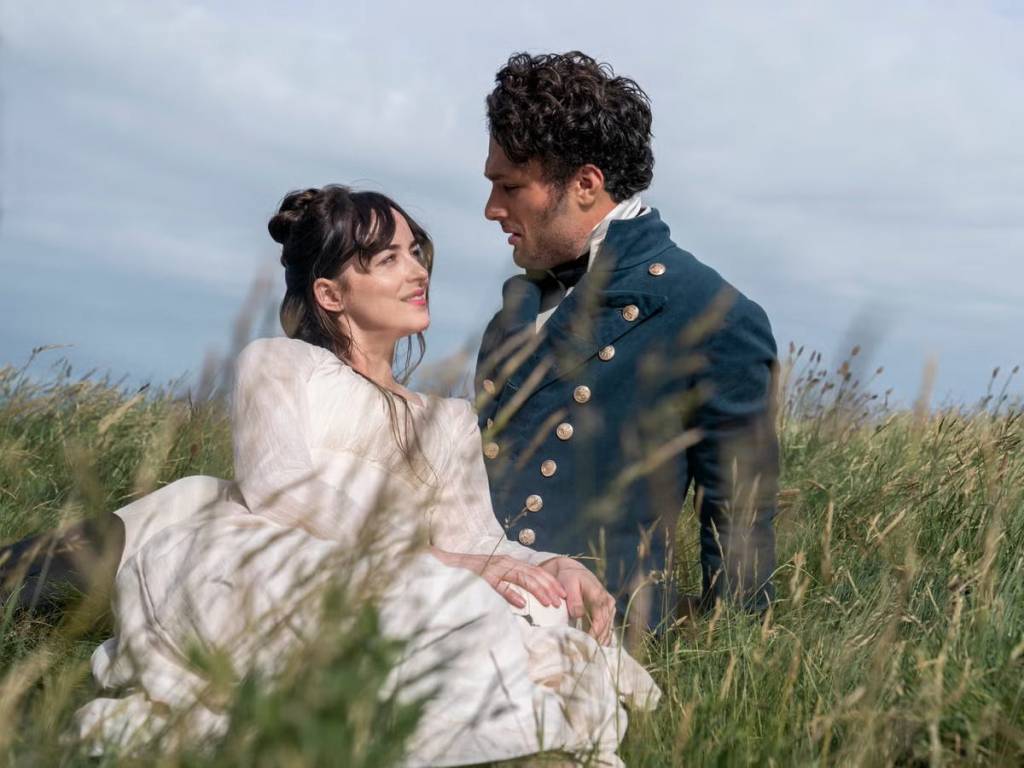
Recently, I sat down to watch Persuasion 🍿 and honestly, I had no idea I was signing up for an emotional ambush. What started as a casual weekend watch slowly unfolded into a quiet ache I wasn’t prepared for 💭💔. Adapted from Jane Austen’s last completed novel, the film holds a kind of stillness you rarely find today that makes you pause, breathe differently and feel more deeply.
It isn’t just a love story; it’s a study of the human heart, of choices we make out of fear, of opportunities lost to hesitation, of regrets that echo long after moments have passed. It’s about longing that doesn’t fade, love that endures in silence and the bittersweet weight of “what if.”
And somewhere between the unspoken glances and unsent letters, Persuasion whispers a truth so tender yet powerful: what is meant for you, no matter how delayed, detoured or distant, finds its way back. 🌌
And what is not meant for you?
No matter how tightly you hold on, no matter how hard you push, it will eventually break away — sooner or later. Some things aren’t meant to be chased; they’re meant to be released. Because when you let go and it still returns, that’s when you know with quiet certainty that it was never meant to leave you in the first place. That’s how you know it was yours all along. 💫
🌹 The Story in a Glance
The story of Persuasion unfolds through the quiet ache of Anne Elliot 🕊️ — a woman whose heart has learned to live between longing and silence. At nineteen, Anne had fallen deeply in love with Captain Frederick Wentworth❤️, a young naval officer with no fortune but an abundance of ambition, character, and devotion. They dreamt of a future together, a life built not on wealth but on companionship and trust.
But society — especially Anne’s aristocratic, status-obsessed family — saw him as “beneath” her. Sir Walter Elliot, vain and concerned only with appearances, disapproved. Lady Russell, Anne’s mother figure, believed she was protecting Anne from a life of hardship. And so, gently yet firmly, Anne was persuaded to break off the engagement.
She didn’t do it out of lack of love — she did it out of duty.
Out of fear.
Out of being too young to fight the world for the man she loved.
And that decision became the quiet grief she carried for eight years. A heartbreak that matured into regret, strengthening the part of her that learned to endure rather than express.
Years later, life shifts again. The Elliots, drowning in debt, decide to rent out their grand ancestral home, Kellynch Hall, to Admiral Croft — Frederick Wentworth’s brother-in-law. And just like that, the past she tried to bury walks right back into her carefully controlled present.
Captain Wentworth returns — older, accomplished, wealthy, confident… everything he once hoped to become. But he also returns with wounds of his own. Anne’s rejection hardened him, made him cautious, made him believe he wants someone lively, bold, “unpersuadable” — the opposite of the girl who once let others decide her life.
Their reunion is the soul of the story.
Not loud.
Not dramatic.
But tense and heartbreaking in its restraint.
In drawing rooms filled with polite society, they exchange civil words, but the real conversations happen silently:
In the way Anne’s eyes lower when he enters a room.
In the way his voice tightens when he speaks to her.
In the way they both pretend to be strangers when every heartbeat remembers otherwise.
As they move through gatherings, family dinners, and autumn walks together with mutual friends, their lives become quietly intertwined again. But barriers remain:
Wentworth believes Anne is no longer interested.
Anne believes Wentworth’s heart has moved on.
Louisa Musgrove — young, lively, spirited — seems to attract Wentworth’s attention, and everyone assumes they will marry. But fate intervenes when Louisa meets with a sudden accident on the Lyme Regis steps — a moment that startles Wentworth into realizing what he wants and does not want in life. Her impulsiveness, once appealing, becomes a catalyst for clarity.
Anne’s steadiness during the crisis softens something inside him — reminding him of the depth and quiet strength she has always carried.
Soon, whispers spread that Anne may be interested in her cousin, William Elliot — a charming man with hidden motives. This misunderstanding pushes Wentworth into the hardest realization of all:
He still loves her.
He never stopped.
And he is about to lose her again.
In one of literature’s most iconic moments, he writes Anne a letter — a confession overflowing with long-held emotions:
“You pierce my soul. I am half agony, half hope.”
Those lines become the turning point.
Anne, breathless and trembling, reads the words that echo everything she has felt for years but never dared to say.
They finally meet alone, stripped of pride, fear, and restraint.
There are no grand gestures, only truth:
that they were always meant for each other,
that time strengthened what persuasion once broke,
that love this real always finds its way back. 🌌
And perhaps the most powerful message the story leaves behind is this:
What is yours will return —
and what isn’t, no matter how hard you hold on, will eventually fall apart.
So instead of chasing, let life unfold.
If it comes back, it was never meant to leave in the first place.
That’s how you know it’s truly yours.
Anne and Wentworth marry — not as the young couple they once were, but as two grown souls who finally chose each other freely. They become partners, equals, companions in every sense — no persuasion, no doubt, no hesitation left between them.
💔 Regret & Longing
What struck me the most was Anne’s quiet suffering — the kind that doesn’t scream, doesn’t demand pity, doesn’t break into pieces for the world to witness. She carries her pain the way some people carry old letters — tucked close to the heart, folded neatly, almost invisible from the outside.
She isn’t loud or dramatic, but her eyes speak in a language only the heart can understand 👀💔.
Every glance toward Wentworth feels like a doorway to a life she once dreamt of.
Every silence between them holds the echo of everything they were — and everything they might still be.
You see the regret, yes — but you also see the acceptance.
The quiet “I made peace with this, even if it still hurts.”
And what moved me even more was that she never collapses under the weight of her past.
She doesn’t lash out.
She doesn’t blame the world.
She simply grows. 🌱
Softly. Steadily.
In her stillness, there is strength — the kind that only comes from years of learning how to hold your heart tenderly even when it feels bruised.
The film captures a truth we all eventually face:
Sometimes, we let go of something deeply right —
not because our heart wants to,
but because the world tells us it’s the “sensible” choice,
or because fear whispers louder than love.
Fear of the unknown.
Fear of choosing wrong.
Fear of disappointing others.
Fear of believing we deserve the happiness we want.
And then, years later, when life has quieted down and the world stops demanding answers, we look back and realize something painful:
It was those moments — those choices we made out of fear or pressure — that shaped us the most.
They become the turning points.
The “what ifs” that taught us how to listen more closely to our hearts.
The mistakes that nudged us toward clarity.
The losses that made way for growth.
Anne’s story reminds us that regret doesn’t always destroy you — sometimes, it deepens you.
Her journey is a reminder that even the softest hearts can carry the heaviest truths, and still find their way back to courage, forgiveness, and love.
✨ The Hope of Second Chances
But here’s the quiet, luminous magic of Persuasion: it isn’t a story drenched in sorrow — it’s a story softened by hope. It’s about second chances 🌈, but not the dramatic, cinematic kind. It’s about the kind that tiptoes back into your life when you’ve stopped expecting miracles.
After all the longing, all the hesitation, all the years lost to pride and silence, the film gently reminds you that what is real — truly real — can bend but doesn’t break. Anne and Wentworth’s love feels like something the universe put on pause, not something it ended. And when fate brings them back into each other’s orbit, it doesn’t feel accidental. It feels inevitable.
The beauty of the movie lies in how it shows love returning not with fireworks, but with recognition — that soft, breath-catching moment when two people realize that the bond they once shared didn’t dissolve with time; it simply waited for them to grow into it.
Because that’s what Persuasion teaches you in the most tender way:
Love doesn’t expire with time; it waits. 🕰❤️
It waits for clarity.
It waits for courage.
It waits for the right moment — the moment when two hearts, wiser and braver than before, finally choose each other without doubt or fear.
And this makes the story feel so deeply human.
It isn’t just romance; it’s a reminder that sometimes life brings things back to us — not because we held on, but because we finally learned to let go in the right way.
Second chances aren’t a redo; they’re a rebirth.
And in Persuasion, you see two souls who walk through regret, grow through silence, and still find their way back — not to who they were, but to who they’ve become.
That’s the magic:
Love arrives again… exactly when you’re ready to receive it.
As I watched Anne and Wentworth’s story unfold, one thing became crystal clear to me — something so simple, yet so profound that it almost feels like a truth whispered by life itself:
👉 What belongs to you will always find its way back.
It doesn’t matter how long it takes or how far it strays. Life may delay it ⏳, destiny may test you 🌀, circumstances may pull you in different directions 🌍, and your own fears might convince you that it’s over… but when something is truly yours — a person, a love, a dream — the universe has a quiet, persistent way of guiding you back to it. 🚪✨
Watching Anne, you realize that the journey isn’t always gentle. Sometimes it’s filled with silence, self-doubt, and the ache of “what if.” The years she spends apart from Wentworth aren’t empty — they are years of learning, maturing, understanding her own heart, and discovering who she really is when no one else’s opinions are steering her. And that’s why, when love finally returns, it doesn’t just come back… it transforms. It becomes clearer, stronger, and more luminous than before. 💫
That’s the magic of Persuasion.
It’s more than a Jane Austen adaptation — it’s a quiet mirror held up to your own life. It makes you think about the choices you made because you were scared, the moments you let slip because you weren’t ready, and the hopes you tucked away because the world told you they were unreasonable.
It reminds you of truths we often forget:
🌹 Don’t be afraid to love — even when it feels risky.
🌹 Don’t let others write your story — your heart knows its own path.
🌹 And above all, believe — because what’s meant for you is already on its way, slowly, steadily, surely.
Persuasion tells you that patience is not weakness, heartbreak is not the end, and distance is not defeat. Sometimes, love needs time to grow… and sometimes you need time to grow into the person who can finally receive what’s yours.
And when it returns, it feels like coming home — to someone, to something, or even to yourself. ✨


 Story and Beyond with Pratiksha
Leave a comment